Highlights
- See how art, religion and everyday life coexist
- Dare to feel how the city's less affluent lived
- Experience the flavors of the Mercat de la Boqueria
- Learn how people had fun in Gaudí-era Barcelona
Description
El Raval occupies the space that remained west of the medieval walls when the city grew outside its first walled perimeter back in the 13th century. For six hundred years, it was the territory of what the city did not want visible within its walls: the mendicant orders that needed land for orchards, the municipal slaughterhouse, the hospitals for the poor and sick, the factories of the first Catalan industrialization of the 19th century, and the working-class population that came to work in them from all over Spain. The sum of these layers produced the most dense, contradictory and misunderstood neighborhood in Barcelona. It's also the most interesting.
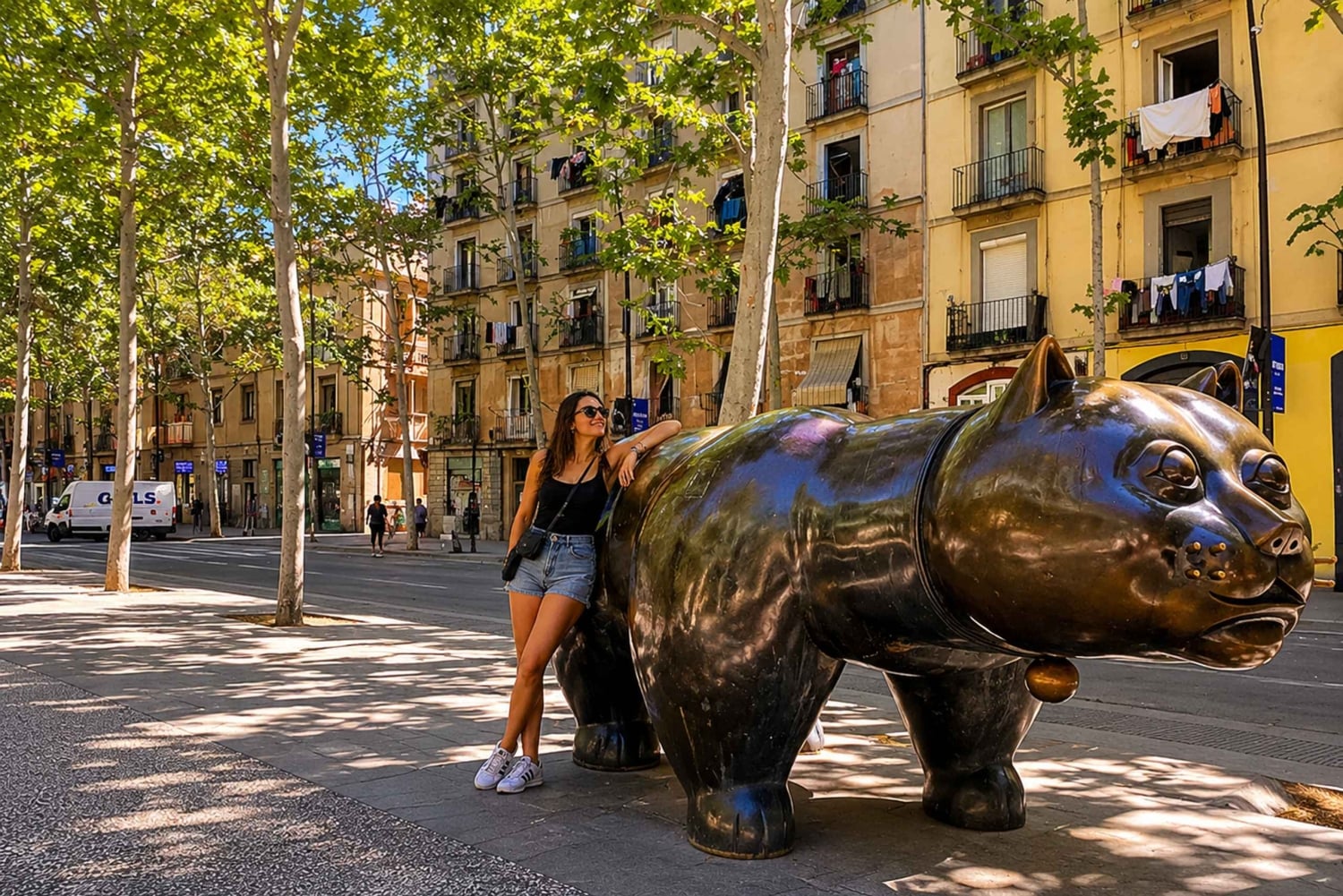
In a three-hour private guided walk, the tour starts at Les Reials Drassanes — the best-preserved shipyard in the world, built between the 13th and 14th centuries to build the galleys of the Crown of Aragon, and now home to the Museu Marítim de Barcelona — and crosses El Raval from south to north: Gaudí's Palau Güell (1889, the architect's first official work in the city), the Liceu Theater rebuilt after the 1994 fire, the Rambla del Raval with Botero's cat, Richard Meier's MACBA opened in 1995, the Hospital de la Santa Creu founded in 1401 and now home to the Biblioteca de Catalunya, the Church of Sant Pau del Camp — the oldest Romanesque building in Barcelona — and the Mercat de la Boqueria. The tour does not exist to clean up the image of the Raval. It exists to understand it for what it is
Includes
Private official tour guide
Excludes
Entrance fees to museums or monuments (the exterior of the Palau Güell is free; the interior of the MACBA or the Maritime Museum are optional)
Drinks or food
Transportation to meeting point
Easy cancellation
Cancel up to 24 hours in advance for a full refund